Back then, you knew who was who. Subcultures in Poland in the 1980s, 1990s, and early 2000s.
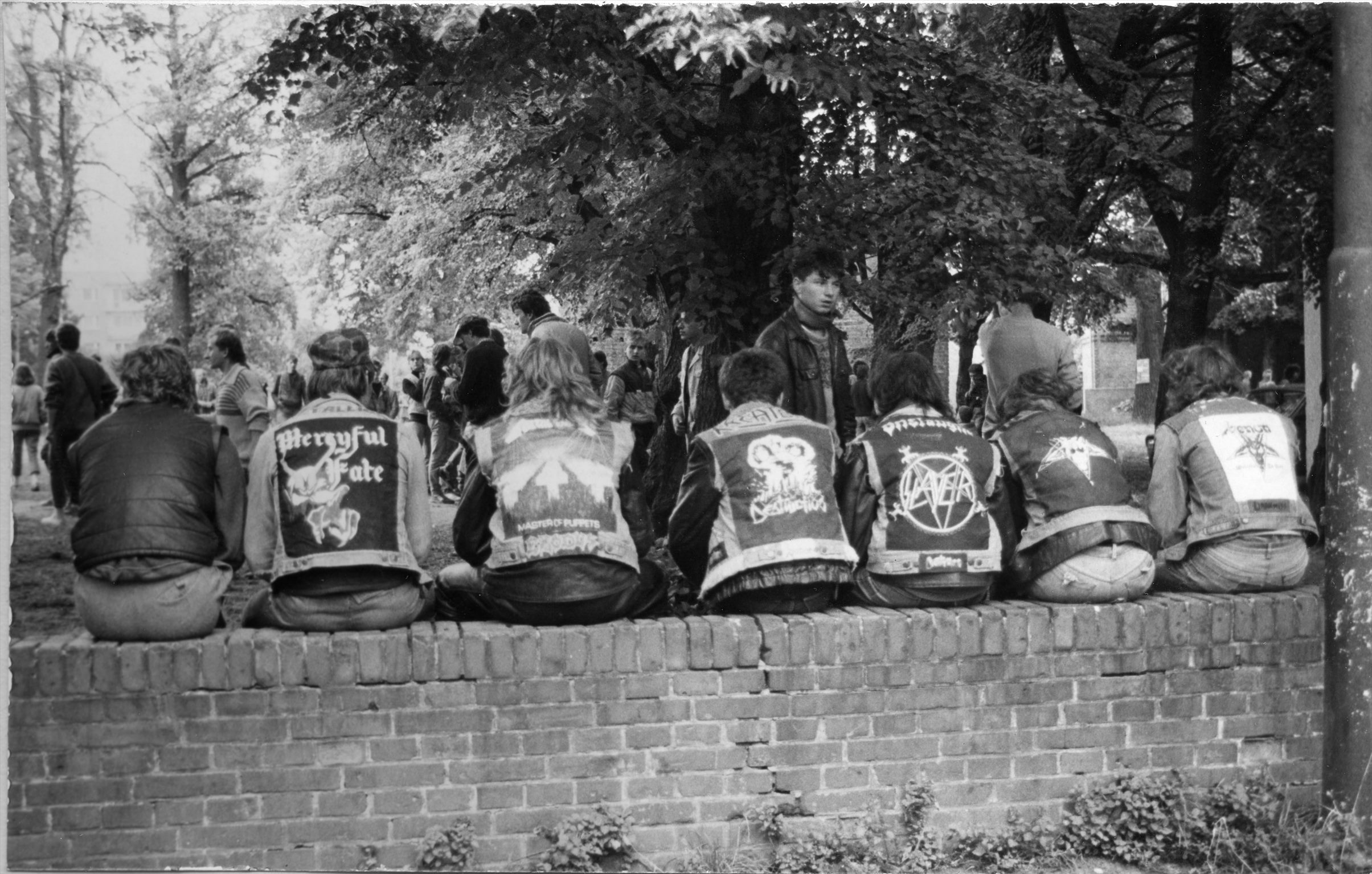
If you grew up in Poland in the 80s, 90s or early 2000s, you really knew who was who. All it took was a quick look at someone’s shoes, jacket, patches, haircut, backpack or what they were listening to, and after a few seconds you had a pretty good idea what world that person came from. Punks, metalheads, Depeche Mode kids, skaters, “dresiarze”, hip hop heads, rastas, goths, emo kids – these were living, breathing groups you saw every day on the street, at school, at the station or under the block.
It wasn’t a time when you could look like a hardcore Depeche Mode fan in the morning, throw on a skate hoodie in the afternoon and in the evening pretend you’d always been deep into reggae. Back then it worked differently. A subculture wasn’t a filter or a weekend outfit, it was something that really told people who you were, who you rolled with and what you listened to.
And that’s what hits the hardest today. Not just that these subcultures existed, but that they were clear, hard‑edged and in a way binding. Today everything blends, leaks and flows between trends. Back then mixing it all didn’t always go unnoticed.
When a band T‑shirt actually meant something
Today a band T‑shirt is very often just part of the look. Someone buys a Ramones or Nirvana shirt in a chain store, puts it on, posts a photo and that’s it. Back then it looked very different, and it’s worth saying that out loud.
If you were walking around in a Depeche Mode shirt, with patches all over your denim jacket or with a military “kostka” backpack covered in band logos, that was not a neutral wardrobe choice. The “kostka”, that square army surplus backpack, was one of the basic carriers of subculture. Cheap, almost indestructible and perfect for pinning patches, drawing band logos with a marker (or white paint that started to crack over time), stuffing tapes, zines and a bottle of cheap wine in all at once.
And that’s the thing – when someone saw you in a shirt of their favourite band, with a jacket full of patches, with a kostka covered in band logos, they could just walk up and check if you really knew what you were representing. The questions were concrete, first albums, line‑ups, live bootleg tracks. If you didn’t know the answers or you started making things up, it did not end with a bit of embarrassment or someone rolling their eyes.
In the better scenario you simply lost your stuff, the patches, pins, T‑shirt, sometimes the whole backpack. In the worse one you just got punched in the face. That’s how it worked and there’s no point pretending it was any softer. If you wear the logo, you’re supposed to know what’s behind it. A subculture wasn’t decoration, it was something you had to be able to defend, with words and, if it came to it, physically.
Punk, metal, Depeche Mode kids, reggae and the rest
From today’s perspective it’s easy to throw all the old subcultures into one basket, but back then the differences were very concrete. Punks were tied to pure rebellion, mohawks, safety pins, heavy boots, cheap wine on the bench and dreams of Jarocin. Metalheads were more focused on the music but just as recognisable, long hair, denim vests, black T‑shirts, band patches, gigs, tape‑trading, the feeling that this was not fashion but a way of life.
Depeche Mode kids had their own universe – black clothes, specific hairstyles, melancholy, Depeche Mode in the centre, a vibe that was half romantic, half dark. Rastafarians and people in the reggae circle stood out immediately, dreadlocks, loose clothing, colours linked with Ethiopia, a chilled way of moving through the world and reggae playing a big role in everyday life.
Add to that hippies, goths, rude boys, ravers, rockers, all that richness that today tends to appear in Polish texts about subcultures as one long list, but back then just lived side by side. Each of these worlds had its own places, records, magazines, shops, clubs.
Hip hop, skate and the block
Hip hop in Poland very quickly glued itself to the housing estates, boards, blocks and everything that happened outside of school. Skaters had their spots, skateparks, stairs, ledges. They met up, tried tricks, polished the concrete and listened to rap or hardcore on tapes that had been copied a hundred times.
The hip hop scene blended heavily with the skate scene, because it was all about similar things. Freedom, city space, your own way of moving through town, your own spots, your own graffiti, your own music. Some kids were more into the board, others more into rap, but the crews often overlapped. Someone had a board, someone had spray paint, someone had a new tape or CD, someone knew a guy making beats. All of that kept circling around the same sets of stairs and squares.
Got a problem?
“Dresiarze” are a separate chapter in this whole story. In the 90s and early 2000s that was a very clear type in Poland, also tied to the broader hip hop culture. Shiny tracksuit, usually a chain on the neck, that particular sound of nylon trousers scraping the pavement and the estate as the centre of the universe. Not a skatepark, not a club – the block, the stairwell, the drying rack and benches under the windows. Damn, I’m probably old already, but I remember it like it was yesterday…
“Dresiarze” hung out exactly on those benches. From the point of view of a school corridor you knew that if a crew in tracksuits was coming, it was smarter to get out of their way, otherwise you might end up in what we used to call a “one‑on‑one”. Sometimes it was just regular estate social life, sometimes more of a “watch what you say and where you stand” vibe, because back then it was much easier than today to catch a beating for a weird look, the wrong football club scarf or simply for not respecting someone’s spot.
For a while you could say I was a bit of a “dres” myself, roaming the estate with the guys, and we always drank our beer at what we called the bench of the gods. It was just a regular bench under the block, facing the drying rack, but for us it was a sacred place. Whoever sat there first started the evening. Whoever brought the beer could count on some respect.
One day some guy said, quote, “this is the bench of dicks”, and he very quickly regretted insulting that holy spot. That’s how it was. No one turned it into philosophy, there were simply things you didn’t mess with. There were benches with history and crews attached to them. Everyone on the estate more or less knew where you could sit in peace and where it was better not to push your luck.
In all of this, “dresiarze” were also part of the bigger picture. On one axis you had skaters on boards, hip hop kids on the ledges, punks outside the club and metalheads outside the bar, and on the other you had those estate benches where life really happened.
Reggae and punky reggae, the Polish mix
Reggae and the whole rastafari circle had a very strong moment in Poland. Over time we even got our own local blend called punky reggae – a mix of punk, reggae, ska and folk that caused quite a stir in the 90s thanks to bands like Alians, Farben Lehre, Będzie Dobrze, Paprika Korps and a few other crews.
For a lot of people reggae wasn’t just about liking a few Bob Marley songs. It was a lifestyle. Dreadlocks, colours, a certain attitude to the world, playing and listening together, pure chill. Compared to punk or skins, reggae was often the slightly softer corner of the whole subcultural landscape.
Back then a subculture was more of a life than a look
The most interesting thing is probably that back then a subculture carried the weight of everyday life. It didn’t stop at clothes. It meant music, hangout spots, gigs, flea markets, copied tapes, notebooks full of lyrics, patches, pins, graffiti, a certain way of talking and specific people around you.
Today most of that diversity has blurred. The boundaries between scenes are much weaker, and young people are more likely to draw from many worlds at once than to go all in on one identity. I’m not saying that’s automatically worse, the world simply works differently now. But something is missing. Back then you walked out of your door and you immediately saw a map of subcultures. Today you mostly see a mix of styles.
Back to the present
Coming back to the present day, we have to be honest and say that you barely see those subcultures anymore. Of course it would be a huge stretch to claim that there are no more metalheads or punks, because the gig and festival scene is doing great and whenever a big event shows up, they pop up like mushrooms after the rain. At concerts, under the stage, in the beer queues, you can still see that colourful mix.
But day to day, that variety is almost gone. Not in the same way as back then. Today we have easy access to chain stores, both cheap and expensive. We mix styles without thinking twice. In the morning you can dress a bit like a skater, in the afternoon throw on a Nirvana T‑shirt, in the evening switch into something completely different and nobody sees a problem.
One thing is certain, that whole era is over. The widespread poverty of those years paradoxically connected people, because everyone had to figure out how to turn one pair of trousers and one jacket into their own style. No access to the big wide world from a phone screen forced people to actually talk to each other, under the block, in clubs, under the stage. It had its charm, even if from today’s perspective it feels like a completely different planet.
If you grew up back then, let me know. Did you belong to any subculture, did you shuffle around in a shiny tracksuit, did you have a kostka covered in patches, did you go to gigs of your favourite bands? From your point of view, has the atmosphere at concerts changed, or do you still feel that same rush when the lights go out and the intro starts?
Remember you can vote for your band, and I honestly encourage you to do it here on FanStage. Big hugs and see you in front of the stage. High five!
Discussion
What do you think? Share your thoughts.