ZAiKS: why looking after your songs matters beyond release day
You’re recording a track. Tweaking the vocals, searching for the right guitar sound, wondering whether the chorus should come in a few seconds earlier. Then comes the artwork, the release, the first gig and checking whether anyone is actually listening. But what about the rights to that song? Who wrote the lyrics, who composed the music, what share does each writer have, and who will handle the money when the track starts being used beyond your own channel?
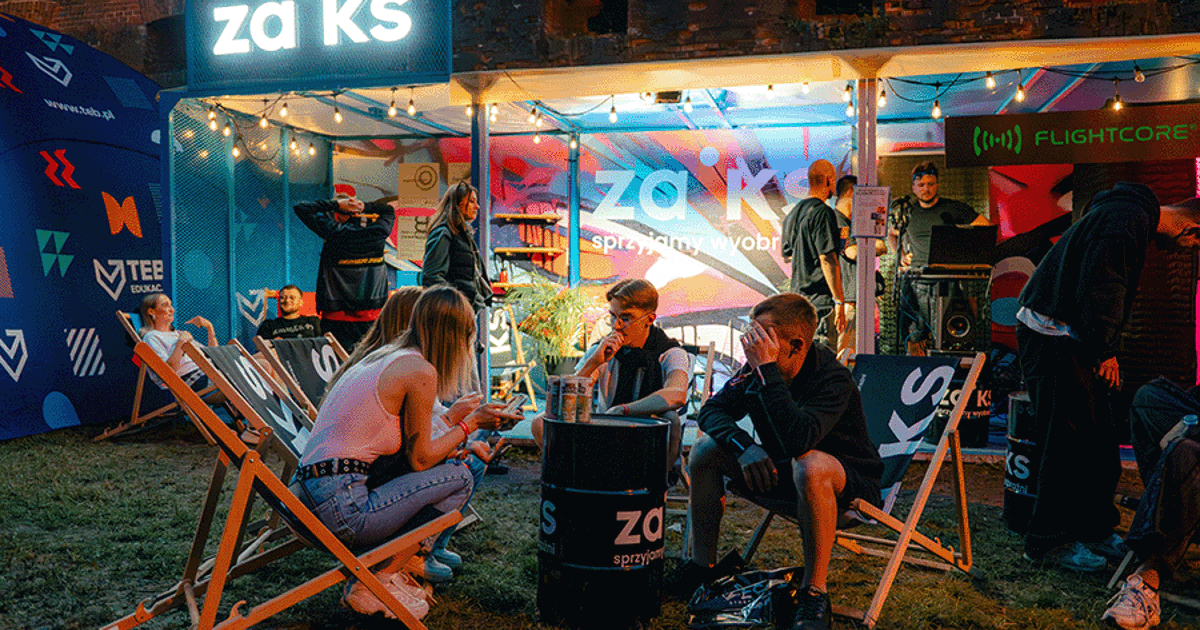
I feel these things are easy to forget when the main priority is simply getting your music out into the world. Yet working with ZAiKS is about precisely that less glamorous, but very important part of a songwriter’s life: licensing, accounting and payment for the use of their work.
Over a century of looking after authors
ZAiKS dates back to March 1918. Its founders included Julian Tuwim, Jan Brzechwa, Antoni Słonimski and Anda Kitschman. The organisation was established by theatre and cabaret writers who wanted to protect their work and receive payment when it was used. Its original name was Związek Autorów Kabaretowych, the Association of Cabaret Authors.
It is an interesting beginning because it reminds us that this problem did not arrive with Spotify, YouTube or cassette copying. Someone created something, someone else used it, and the author had to make sure their work was not treated as a free extra thrown in with everything else.
Today, the ZAiKS Authors’ Association is a collective management organisation for copyright. It grants licences, collects payments from those using works, then distributes that money to the entitled creators. These payments are what we call royalties.
There is no magical bonus for being an artist behind that word. It is money owed to an author for the use of their work.
For me, the biggest benefit of working with ZAiKS is that authors do not have to organise the entire licensing and royalty collection process themselves for the works covered by their agreement. ZAiKS handles these tasks collectively, within the scope of the rights entrusted to it.
Imagine you have written the music for a song and someone else has written the lyrics. The song begins to have a life beyond your release: it is performed at concerts, played in public or broadcast on the radio. Within the rights it manages, ZAiKS handles the royalties for those uses. That does not mean every play generates the same amount. Payment depends on the type of use and the applicable distribution rules.
This cooperation does not stop at the Polish border, either. ZAiKS has reciprocal representation agreements with foreign authors’ societies. Through these agreements, it can receive and pass on royalties for the use of Polish repertoire abroad, within the scope those agreements cover.
That matters for smaller creators too. You do not need a stadium tour for your music to reach someone outside Poland.
An author is not always a performer
One thing needs particular emphasis: ZAiKS represents authors’ rights, not the rights performers acquire through the performance itself. If you have written the music or lyrics, we are talking about copyright. If you sing or play someone else’s composition, the performance alone does not make you its author. Of course, one person can be both an author and a performer.
That is why saying, “I’m a musician, so ZAiKS will take care of all the money I earn from music,” is far too simplistic. First, you need to establish which rights entitle you to payment.
Another important distinction is between working with ZAiKS and being a member. You do not have to join the association to entrust ZAiKS with managing your rights and receive royalties. The organisation works both with its members and with authors who have signed the relevant agreement but are not members.
Membership is a separate matter. ZAiKS explains that it also provides access to additional legal and financial assistance and welfare programmes, under the association’s rules. You should not therefore assume that all these benefits automatically apply to everyone who has simply entrusted their rights to the organisation.
It is also worth mentioning the Creativity Support Fund, which has operated since 1970. Its purpose is to support creative work and cultural projects. This is another area of ZAiKS’s activity, but it does not mean an automatic payment for every author who registers a song.
The royalty distribution system itself needs information. The organisation has to know which work it is processing, who created it and who is entitled to a share. Works can be registered electronically through zaiks.online, and procedures exist for confirming shares in jointly authored works.
In my view, this is exactly where it is worth getting things straight before a song starts making money. When everyone is still together at rehearsal, it is easier to talk about who wrote what. Years later, after the band has split and the first serious dispute has started, that conversation can look very different.
Łzy and the authorship dispute
The story of Łzy shows why it is worth discussing authorship while a band is still working together normally. Not only after a split, when everyone already has their own version of the past.
Adam Konkol has publicly said that he wrote most of Łzy’s material but agreed to allocate some of the royalty shares registered with ZAiKS to the other musicians. Later, he began questioning co-authorship, including Anna Wyszkoni’s credit on “Agnieszka już dawno…”. Wyszkoni was listed in the registration, while Konkol maintained that she had written neither the lyrics nor the melody of that particular song. That is his position in the dispute, not a ruling we can treat as established fact.
In January 2025, Wprost reported that six people were listed in the ZAiKS catalogue as authors of the music and lyrics to “Agnieszka”. The entry alone, however, cannot tell us exactly who created what while the song was being written.
So this is not a situation in which Konkol suddenly stopped being credited as an author after leaving the band. The dispute concerns whether other people were correctly credited as co-authors and allocated the resulting shares. According to Konkol’s account, some of these arrangements dated back to the period when the band was still working together.
And this is where the issue becomes bigger than one song. A band can play together, tour and spend years building a song’s success, but authorship and a contribution to that success are not automatically the same thing. ZAiKS distinguishes the composer from the arranger, and registering a work requires identifying its creators and their shares.
That is why crediting someone as an author should not be a friendly gesture along the lines of, “We play together, so everyone gets something.” First, you need to establish who actually made a creative contribution, then agree on the shares and keep the paperwork in order. Co-authors can determine the size of their shares by agreement.
In my view, it is worth doing this before serious money enters the picture. Not because you should immediately suspect your bandmates of bad intentions. Because ten years from now, everyone may remember the same evening when the chorus was written differently.
The story of Łzy is not proof of a mistake by ZAiKS, nor does it mean the organisation should somehow know on its own who wrote a particular song. What it shows is the importance of accurate registrations and clear agreements between authors. Working with an organisation that distributes royalties is no substitute for getting things straight within your own band.
Work with ZAiKS, but read the agreement
I would not want this article to sound like a promise: sign a document and you will be living off royalties from next month. That is not how it works. Registering a work does not mean someone will use it, and the amount you receive depends on how it is used and the applicable distribution rules.
ZAiKS does not create your copyright, either. Authors acquire those rights automatically, not only once a song has been entered into a database. Registration gives the organisation the information it needs to manage the work and process the associated royalties.
Working with ZAiKS also involves costs. It deducts costs associated with collecting and distributing royalties from the payments it receives. You should not therefore assume that the entire amount paid by someone using a work goes into the author’s account without deductions.
Before signing an agreement, you need to check its scope. The official rules allow you to limit the rights entrusted to ZAiKS by excluding particular types of use or specifying territories. The arrangement has no fixed end date, but it can be terminated with three months’ notice, taking effect at the end of a calendar half-year.
The standard agreement also covers the author’s existing and future works, within its scope. This is not a document you should sign without reading, treating it as a form relating to just one single.
For me, the conclusion is simple: if you write music or lyrics and your works are performed, broadcast or played in public, it is worth looking into this cooperation. Not because ZAiKS will turn you into stars. Because releasing a song and collecting payment for its subsequent use are two different things.
This article is not sponsored. I encourage you to read the information for authors, the terms of cooperation and the documents before making a decision. It is not about signing anything blindly, but about making an informed choice to look after your own work.
Because a good track can be written in a bedroom, at rehearsal or at the kitchen table. But once it goes out into the world, it is worth knowing not just who is listening, but also on what terms people are using it. Music is emotion, of course. But writing it is work too. And there is nothing wrong with an author being paid for that work.
How FanStage will help you
At FanStage, we want to do more than write about music. We also want to make life easier for the people who create it. We want artists to find the information they need more easily, understand the terms of cooperation and move from reading about their rights to taking practical action.
That is why we will make every effort to enable artists working with FanStage to begin the ZAiKS application process directly through our platform in the future. This is a direction we want to pursue, and making it happen will require the appropriate arrangements with ZAiKS.
We are working to make that process simpler: less searching, less jumping between websites and an easier way to look after your creative work. Keep an eye out for further updates on FanStage. We will keep you informed of our progress, and as soon as we can introduce the option to begin the ZAiKS application process through our platform, we will let our community know straight away.
Discussion
What do you think? Share your thoughts.