Blog 27: the girls who turned Polish teens into an emo generation
A personal story about Blog 27, their emo style, the tour with Tokio Hotel and the breakup of the duo. I look at what Tola Szlagowska and Ala Boratyn are doing today and why they are still worth remembering.
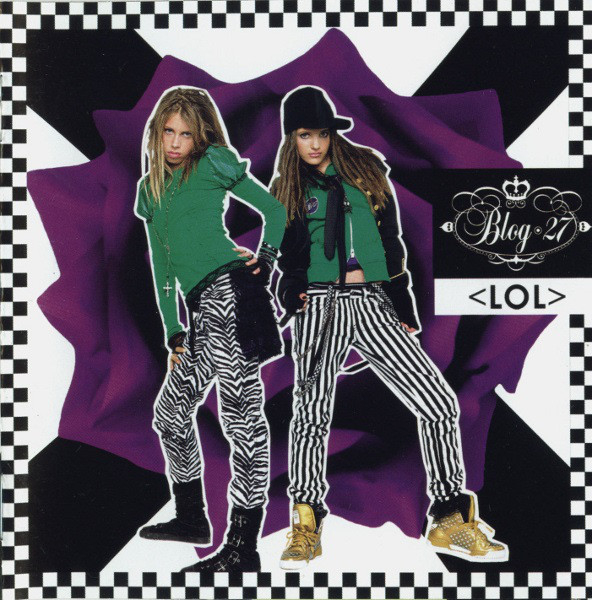
If you grew up in Poland in the mid-2000s, you either remember Blog 27 very well or at least recall their songs flashing on Viva and radio charts. It was the moment when two teenage girls from Poland suddenly started to look and sound like something you previously only knew from international MTV, not from “our” local TV.
For me this is a very concrete memory from the days of Gadu-Gadu, Bravo and the first serious online drama on forums. I remember how their music played in the background of everyday life, how fashion in the classroom started to change and how suddenly a Polish band could support Tokio Hotel on tour in Germany, Austria and Switzerland.
“Hi, this is Tola and Ala” and the lost media of their website
There is one thing from that time that sticks in my head more than any chart position: the official Blog 27 website.
Today, when most bands have standard social profiles and a simple one-page site, it is hard to explain the vibe of that era. In the mid-2000s a band website was its own little universe, something between a teenager’s bedroom and a fan notebook, just moved into the browser. Blog 27 had exactly this kind of website, very interactive for those times, colourful, full of clickable elements that did different things. If you remember MySpace, you know exactly what I mean.
What I remember most strongly is the phone motif. I clearly remember that there was a graphic phone on the site you could click, and then an answering machine message from the girls would start playing. I remember something like “Hi, this is Tola and Ala...”, a simple but very distinctive line that made the line between TV and the internet suddenly blur, because it felt like you were genuinely closer to them.
Today those recordings are classic lost media. The site itself can still be traced in internet archives, but the answering machine audio is not easy to find anymore, so what remains is the memory of people who really visited, clicked and listened back then.
It shows perfectly that Blog 27 were more than a band with one or two singles. They were a project building their own world, with their own website, their own style and their own language.
Two girls born on November 27 and two very different homes
Let’s start from the beginning. Blog 27 were founded by Tola Szlagowska and Alicja Boratyn, two teenage girls connected by more than just a shared passion for music. Both were born on November 27 and this date, combined with the blog craze of the time, gave the band its name.
As they have said themselves, they had known each other since early childhood, their families were friends and they were treated almost like sisters. This matters, because later on the breakup of the duo was felt not just as a lineup change, but as a personal split in a relationship that from the outside looked unbreakable.
The homes they came from played a strong role in the story.
Tola grew up in a family deeply connected to music. Her father was active on the Polish rock scene, working with popular bands, and her brother later joined Blog 27’s live lineup as a drummer. That meant not only musical genes, but very concrete advantages – contacts, knowledge of touring, studios, contracts and media. For a teenager it is a huge boost at the start, even if at that age you do not fully understand it.
Ala’s situation was a bit different. She did not have such a widely known rock star dad, even though her father, Darek Boratyn, is also involved in music and today Ala supports him in his band, singing backing vocals. In interviews from back then she said quite openly that in Blog 27 she missed space for creativity and for live shows, and that everything was heavily focused on promotion and image.
This clash of two worlds – stronger industry background on Tola’s side and weaker on Ala’s – becomes very visible later, when both of them start making separate decisions about their careers.
“Uh La La La”, “Hey Boy” and the moment everyone thought they were from abroad
It is 2005. “Uh La La La”, a cover of Italian singer Alexia, appears on radio and music TV, but this time performed by two Polish teenagers. The way the track was produced, how it sounded and how the video looked led to one simple effect: lots of people genuinely thought it was a foreign band.
Then came “Hey Boy (Get Your Ass Up)”, another English-language single, radically different in feel from most Polish pop of that era. Against the local competition Blog 27 looked like they had teleported in from another planet. They sang in English, had their own style and radiated the kind of confidence and ease that people usually expected from Western stars, not from local acts.
On November 27, 2005, on their shared birthday, they released the album “<LOL>”. In Poland it sold extremely well and went double platinum, and in total Blog 27 are credited with selling over 250,000 records worldwide. For a project built around teenagers, these were numbers that made it hard to call the whole thing a lucky accident.
In 2006 and 2007 the awards started piling up: Superjedynki, an MTV Europe Music Award for Best Polish Act, the European Border Breakers Award for a debut breaking out beyond its home country. For two girls who had recently still just been childhood friends, that had to feel surreal.
Emo, Avril and Polish school corridors
This brings us to a topic that still stirs emotions today – literally and figuratively – emo.
On paper Blog 27 played pop, teen pop, with some dance and pop-rock elements. But if you look at the photos and videos from back then it is hard not to see how their visual style got very close to what Polish teenagers started to associate with emo aesthetics. Heavy eyeliner, high contrast colours, stripes, slogans, side-swept bangs, a mix of rebellion and sweetness.
Years later media would write quite directly that Blog 27 are considered one of the precursors of emo fashion in Poland, which mirrors how millennial memory works here. You can argue about whether it was “real emo” in subcultural terms, but kids in school corridors did not use textbook definitions, they went by what they saw on TV and in photos.
This is why the comparison to Avril Lavigne, while not perfect stylistically, still makes sense. Avril was not strictly emo either, more of a pop‑punk outsider in the mainstream, but for a mass audience she became the face of a certain teenage rebellion that quickly got copied across Europe. Blog 27 played a similar role in Poland, just for a slightly younger crowd and in a more sugary version.
From the point of view of a middle school hallway, Blog 27 were one of the first bands that did not just play songs, but actively changed how people dressed, did their makeup and wanted to look on disco photos.
Tokio Hotel, big arenas and running into the European scale
The next key chapter is the tour with Tokio Hotel.
When the German band was at the absolute peak of its popularity, Blog 27 joined them as support on shows in Germany, Austria and Switzerland. We are talking big arenas, thousands of fans, screaming, posters, everything that for us then defined “real” Western success.
From the point of view of a Polish teenager watching this on TV or reading about it in teen magazines, it looked like an impossible scenario coming true. A band from our country tours with Tokio Hotel, plays in front of their fans, gives interviews to foreign media.
It was also the moment when you could clearly see that Blog 27 were not just a local curiosity, but a project built to fit into the European teen scene – and it worked, even if only for a while.
MTV Cribs, Ala’s family house and life on TV
The scale of their popularity becomes most visible in small details. One of them is the Polish version of “MTV Cribs”.
At some point Alicja Boratyn invited viewers into her parents’ villa and gave a tour in a show that, by definition, was reserved for people teens wanted to see “behind the scenes”. It was not just another interview – it was a statement that Blog 27 were full‑on pop culture stars with their own style, their own story and, for those times, very intense media presence.
Today, in the flood of content from Instagram, YouTube and TikTok, it is hard to compare, but back then “MTV Cribs” was a clear status symbol. The fact that Ala appeared there shows how deeply this project penetrated the mainstream.
The breakup: from success to “we couldn’t make it work”
You simply cannot tell the story of Blog 27 without their breakup. In 2006, while the band was still on a high, Alicja Boratyn announced she was leaving. Officially the line was about personal and artistic differences, but over time both girls spoke a bit more openly about it.
Ala stressed that she missed proper live shows, a natural working atmosphere and real influence over the music. She felt more like a part of a promotional machine than a creative one. Tola, on the other hand, has said that she did not hear about the decision directly from her friend, but from the label and surroundings, which must have been a heavy blow, given their shared childhood and the fact they were almost like family.
Looking back now, it is the story of two teenagers thrown into an industry with its own pace, expectations and a certain brutality when it comes to pressure, media and fans. In the mid-2000s hardly anyone talked publicly about mental health of young artists, and popularity came bundled with a lot of anonymous, nasty hate.
After Ala left, Blog 27 continued as Tola’s project with a full live band.
“Before I’ll Die...”, the series “39 and a Half” and the definite end of Blog 27
In 2008 the second album “Before I’ll Die...” came out. The material was much more personal and mature, largely written by Tola. The singles “Cute (I’m Not Cute!)” and “Fuck U!” showed she was trying to move toward alternative pop and more personal lyrics, not just straightforward teen hits.
Several tracks from that album found their way into the popular TV series “39 and a Half”, in which Tola also appeared, with her band members visible in the background. It was a smart synergy play – the series promoted the music, the music promoted the series, and Blog 27 still lived in viewers’ minds.
Despite that, not long after Tola made a radical decision: she moved to the USA, enrolled in music school and effectively closed the Blog 27 chapter. The official site disappeared, the project was put on ice and she never returned to it as an active band.
What Tola is doing today
After the Blog 27 adventure, Tola moved to Los Angeles, where she continued her music education – first at Alexander Hamilton High School, then at the Los Angeles College of Music. In interviews she has said she spent some time working as a nanny, earning a living from a regular job rather than from her old fame.
She came back to music under her own name, Tola, leaning into an alternative, intimate pop sound completely different from Blog 27. In 2021 she released the album “Subtitles”, promoted with tracks like “First Love” and “Recycled/Fragile”, where you can clearly hear she is a very different artist than the girl from “Uh La La La”.
Today she lives in Spain, travels a lot, works as an independent artist and is active on social media. She no longer functions as “the former emo teen star”, but as someone with her own path and new things to say.
What Ala is doing today
After leaving Blog 27, Ala released a solo album titled “Higher” and co-created the theme song for the TV series “Majka”. That phase did not bring her the same level of fame as Blog 27, but it opened the door to a calmer, less commercial way of being an artist.
In the meantime she finished cultural studies and worked as a waitress and restaurant manager – essentially doing what many people in their twenties do, whether or not they once had five minutes of fame.
Her most important project today is Ala Zastary, a duo she formed with her husband, Jakub Sikora. They released the album “Jutro” and then “Potwory”, making music that has more artistic freedom, less pressure for chart results and much more room for lyrics and emotion.
Ala is still present in the media. She sometimes appears on morning TV shows, talks about her approach to music, about working with her father, and about what it is like to be a former teen idol who chooses a quieter, more conscious life.
Why it is worth remembering them
Blog 27 did not last long, but left a bigger mark than many long-running projects.
They showed that a Polish teen pop project could look and sound just as international as Western acts.
They were one of the first Polish youth bands to make real noise in German-speaking countries and in Italy.
They helped popularise emo aesthetics and alternative style among Polish teenagers.
They entered the music industry very young and then had to learn how to live with what came after fame – from studies and regular jobs to returning to music on their own terms.
For me this is exactly the kind of story worth revisiting in a series about bands that were a genuine piece of life for millennials, and for younger audiences are already becoming curiosities from the past. In the case of Blog 27 it is not just a nostalgic meme, but a very real fragment of Polish pop culture that, for a brief moment, truly believed anything was possible.
And if there was a real chance for Blog 27 to come back in the original lineup for one concert, would you want to be there?
In this article

Discussion
What do you think? Share your thoughts.