How rap was born in Poland. From Kazik and home demos, through Liroy, Slums Attack and Molesta, to a mental escape from grey reality
A personal story about the birth of Polish rap, from the first records and home demos to dubbed tapes played on a walkman. Liroy, Peja, Kaliber 44, Molesta and a scene that spoke in the voice of post-transition Poland.
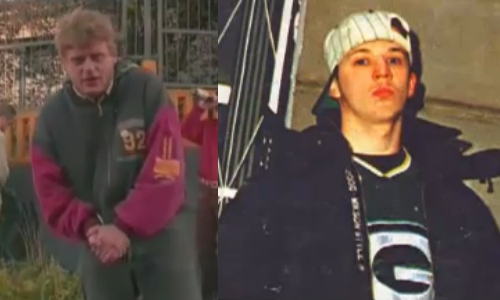
Today, Polish rap is everywhere. On playlists, on the radio, at festivals, in ads and on TikTok. But the beginning of this story looked completely different, no huge budgets, no villas with swimming pools, just home tape recorders, dubbed cassettes, housing blocks, poverty and one simple message: this is not America, this is post-1989 Poland, and somehow you have to survive here.
And that is exactly where this story should begin. Polish rap was not born out of a dream of luxury, but out of the need to describe its own reality. A reality very different from what we saw in MTV videos, but for us much more real.
1991: Kazik opens the door
The beginning of Polish rap on record is most often linked to Kazik and his 1991 album Spalam się. It was not yet a hip-hop “scene project”, more an individual vision from an artist who took the rap form, mixed it with his own style and said things in Polish that no one had really said like that before.
You can argue over how much Kazik really “was hip-hop”, but one thing is certain, he showed that in our language you could enter that rhythm and phrasing, and that words could drive a track differently than in rock or pop. For many later rappers, that was the first signal that you did not have to just listen to the USA, you could try it your own way.
1993: home demos and the birth of crews
A little later, in 1993, the real story of Polish hip-hop crews begins. In Poznań, Peja and Iceman, who was still going by DJ Def back then, founded Slums Attack. These were pure DIY days, homemade recordings on a basic cassette recorder, the first demo Demo Staszica, then Demo Studio Czad.
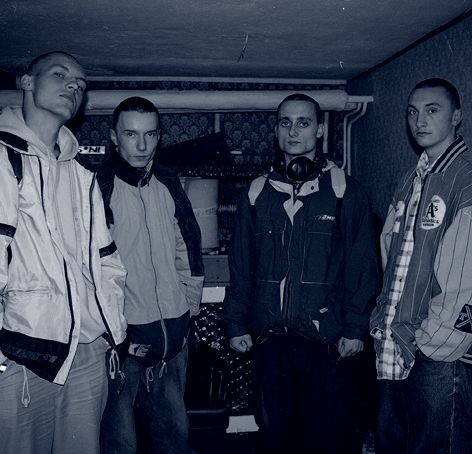
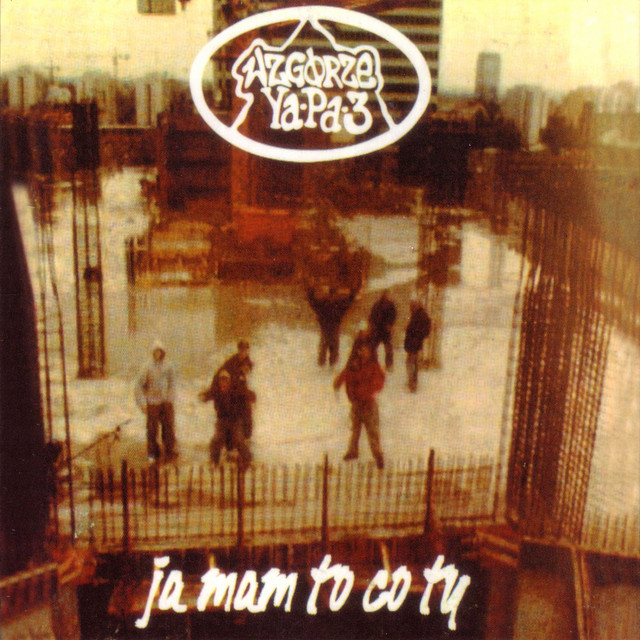
That same year, Wzgórze Ya-Pa-3 was formed in Kielce. I hope nobody gets offended if I call them a pioneering formation in Polish hip-hop and its wider scene. This was no longer a single artist. It was a whole crew representing its city, its people and its streets.
This was the stage when rap in Poland was still more of a movement than a genre. Young people recorded at home, on borrowed tape recorders, experimented with beats and then played the tracks to each other. Nobody was thinking yet about whether this would sell on a massive scale. What mattered was that finally someone was speaking the way people really spoke on the estates.
1995: Liroy steps to the front
In 1995, Liroy released Alboom. The album officially sold in the hundreds of thousands, and some estimates put it at around half a million copies, which for those times was absolutely massive.
But one very important thing needs to be added here. The early years of rap, just like the whole Polish music market at the time, were not easy. Piracy was everywhere. Most people dubbed tapes for each other or bought them at street markets and trading fairs, where for a fraction of the price you could get a fresh release, often recorded badly, but still good enough to play to death for hours.
That was reality. Original tapes sat on shelves in Empik and other music stores, while at the same time “underground” copies would appear at market stalls, sometimes that same week. People would split the cost of one cassette, then dub it again and again, and the next generation of walkmans would keep chewing through the same album on tape that had already lost half its sound quality.
And that is exactly why Alboom’s result is even more impressive. If so many people had the album from a market stall or a dubbed copy, and the official sales still reached hundreds of thousands, it means Liroy really broke through to a huge audience. People were not just listening to him on the cheap, they were also buying legal editions, and with piracy that widespread, that was something exceptional.
This is one of those moments when you can see that rap was no longer just a niche passion for a handful of people. It became the voice of a whole generation that did not necessarily have money for every record, but still did everything it could to get those tracks and know them by heart.
1996: Kaliber 44 flips the table
A year later, in 1996, Kaliber 44 came in with Księga Tajemnicza. Prolog. You have to admit, that album felt completely fresh, psychedelic, strange, deeply original rap that was not trying to save itself by forcing American formulas into everything.
Kaliber 44 did something that sounds obvious today, but back then it was a breakthrough. They showed that in Polish you could create your own unmistakable style by blending hip-hop with something entirely your own. For many listeners this was the first encounter with rap that felt like horror, a dream and housing-estate reality all at once.
This is also the moment when Poland stops being just a “copy of the USA” in this genre. Of course the inspiration was still coming from the West, but it was becoming more and more obvious that the scene was local, deeply rooted in our reality, our cities and our language.
1996–1998: Slums Attack, the first official releases and underground tapes
Between 1996 and 1998, Slums Attack started releasing their first official material. Poznań got its strong, street-level face of hip-hop. There was no softening of reality there, just a hard message about the estate, poverty, hustling and the consequences of people’s choices.
Around that same time, more and more young rappers started creating. We had Kielce with Wzgórze Ya-Pa-3, Poznań with Slums Attack, Katowice with Kaliber and Warsaw, which was about to explode with its own releases.
This is also the moment when rap in Poland really starts to belong to the street. The lyrics are bold, rude, often vulgar, but behind them there is real life, not some fantasy about movie-style gangsterism.
1998: Molesta and Skandal, Warsaw steps to the front
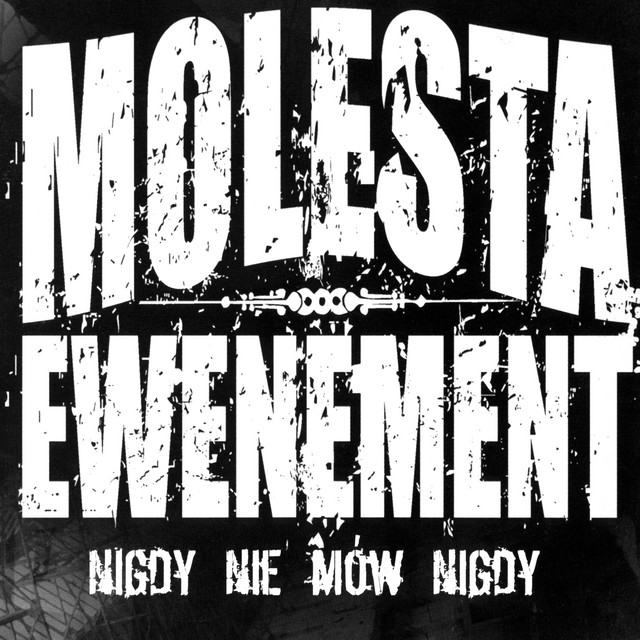
In 1998, Molesta released Skandal. Without question, one of the key records of the street variety of Polish hip-hop. For many people, this album is the definition of “real Polish rap”, housing blocks, estate life, distrust of the world, real problems.
Molesta was not rapping about villas with pools. They were talking about what happened on the stairs, under the block, in the gateways and on Polish housing estates. You knew you were not in America, you were in 1990s Warsaw, where the transition brought a free market, but not necessarily full wallets, maybe apart from a few exceptions, and where the system forced you to find your place in something nobody had experienced before.
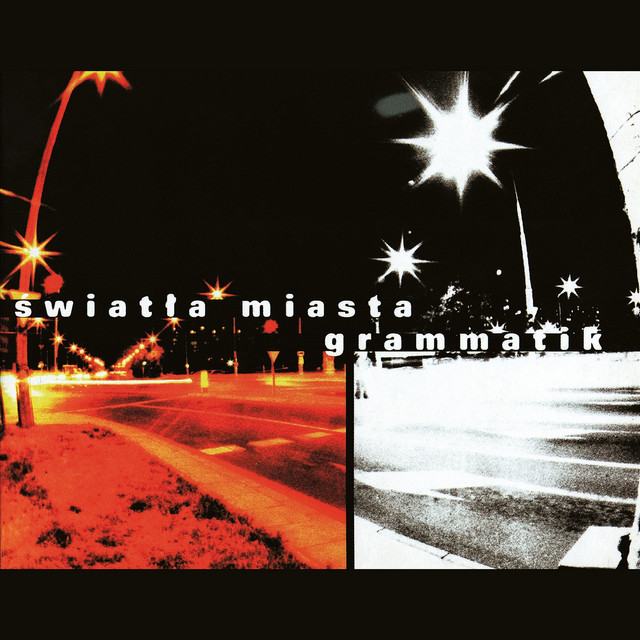
1999: Warszafski Deszcz, ZIP, Płomień, Grammatik
A year later, in 1999, Warszafski Deszcz released Nastukafszy. It is another album that added an important brick to the picture of the Warsaw scene, raw, street rap where you can feel the heavy atmosphere of the late 1990s.
At that time ZIP Skład was growing, Płomień 81 appeared, Grammatik came through, along with other Warsaw crews. The scene was becoming more complex. On one side you had tough estate stories, on the other more reflective, more “intellectual” rap that was not afraid to move in a more poetic or journalistic direction.
That was the moment when rap finally stopped being a curiosity. It became the voice of a generation that grew up during the transition, a generation that had neither a “marble palace” nor full social security, just a somewhat grey reality, some chaos and a lot that was never really spoken out loud in the official story of the country.
2000: Magik, Paktofonika and “Kinematografia”
At the turn of the millennium there is one more, completely separate chapter that you simply cannot skip if you’re talking about the beginnings of Polish rap. In 1998, Paktofonika is formed in Katowice, made up of Magik (already known from Kaliber 44), Rahim and Fokus. Two years later, on 18 December 2000, Kinematografia comes out – an album that, for a huge number of people, became a language of its own for talking about growing up, loneliness, fears and all that inner split that came with the new reality.
This is no longer just a description of the street or poverty. It’s a step further: very personal lyrics, existential thoughts, “Jestem Bogiem” dissected every possible way, tracks that get under your skin and stay there for a long time. It’s no coincidence that to this day people talk about Magik as one of the most important and most unique voices in the history of Polish hip-hop, even though in the end he only recorded a handful of full-length records.
It also needs to be said out loud, the thing many of us remember from that time. On 26 December 2000, on the second day of Christmas, early in the morning, Magik jumped out of the window of his flat on the ninth floor of a block in the Bogucice district of Katowice. He was taken to hospital with severe injuries and died there at around 6:45 a.m. He was 22 years old, he left behind a wife and a young son.
Over the years there have been many attempts to explain that decision. People talked about depression, mental health struggles, financial problems, tensions at home, the pressure of growing fame, fear of military service. The full truth is probably known only to him. For many fans one thing stays the same: Magik was someone for whom rap was a kind of escape and safety valve, and at the same time he never fully managed to escape his own demons.
To this day he’s present in the memories of fans, in quotes, on murals, in the film You Are God and in the way new generations of rappers speak about him with full respect. Kinematografia still finds its way into the headphones of young listeners, often people who weren’t even born in 2000. That’s probably the best proof that this chapter of Polish rap didn’t close with his death.
How it differed from the USA
Of course Polish rap clearly drew from the USA. From the form, the beats, the images, gangsta rap, the stories about the street. But it quickly became clear that there was no point pretending we lived in the same world.
In the States, rap often told stories about danger, the police and the streets, but also about dreams, big money, success and coming from nothing to the top, the so-called American Dream. In 1990s Poland, that “top” looked very different. For many people, the dream was simply a normal life, not necessarily a villa.
That is why Polish rap hit so hard. Because it did not try to force the American dream into our heads. It talked about the fact that life was hard. That there was no money. That you felt pushed to the margins. That the system was supposedly democratic, but you were still broke while others were getting rich through connections. And that the only space where you could say all of that in your own way was rap. That rap.
The era of tapes, walkmans and mental escape
I remember the end of the 1990s very well. Back then I had Polish rap in my headphones, and for me it was a mental escape from grey reality. Not because I came from what people would call a “pathological home”, because I did not. But I was not a rich kid either. I was somewhere in the middle.
Still, when I listened to those records, I felt like I understood the boys from the street and that their message was close to me. Respect for the fact that they spoke directly, with no sugar-coating, about what life really looked like when not everything was in order. You sat in your room, put the cassette in, hit play, and suddenly all those stories from the blocks, the gateways and the estates pulled you in as if you were part of them.
Tapes moved from hand to hand. One original, the rest dubbed endlessly, the sound already a bit muffled, the hiss, the familiar rewinding with a pen when the tape got stuck. You played the same demo a hundred times, knew every line by heart and felt that this was not just music, it was somebody’s life put on tape. And because of that, a little bit of ours too.
Who is still around today
Some of the pioneers perform less often today, but they have not disappeared. Liroy is still active, has concerts listed for 2026 and keeps showing up at rap events and club stages. Last year I was at the premiere of his biographical film and I honestly recommend it.
Abradab, co-founder of Kaliber 44, is still playing live and has events announced for the coming seasons. Wzgórze Ya-Pa-3 has not been locked away in a museum either. Newer singles appeared in 2023 and 2024, and their official channels show more activity and upcoming appearances.
Peja and Slums Attack are a phenomenon of their own. I have the impression that Rychu rose like a phoenix from the ashes and, despite all the years behind him, his story is still going. He is still widely seen as one of the most important figures in Polish rap.
So in truth, many faces of that first wave are still with us. Maybe not always sitting at the top of the newest playlists, but still on stage, still in line-ups, still in the memory of people who grew up with their records.
In the end
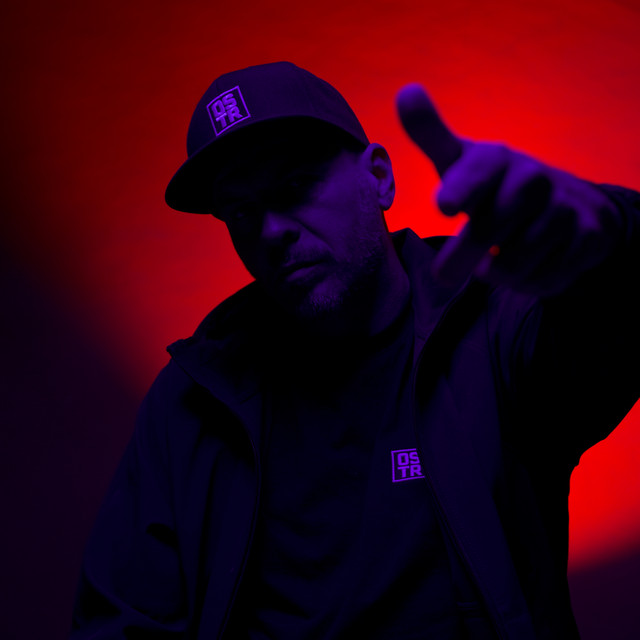
One last important note. In this text I haven’t listed everyone who helped build Polish rap in the 90s and early 2000s. I consciously focused on those who left the strongest mark in my head and on my tapes. Kaliber 44 with Magik, Abradab and Joka, Wzgórze Ya-Pa-3 from Kielce, Slums Attack with Peja from Poznań, Warsaw’s Molesta, ZIP Skład, Płomień 81, Grammatik, Pezet, O.S.T.R., later WWO with Sokół – this is only one part of a much bigger puzzle that every listener will put together a bit differently.
This is not a complete encyclopedia of Polish hip-hop, it’s my subjective map of those beginnings. If in your version of the story there are other names, other albums, other tracks you played on your walkman, all the better. The most important thing is that we all meet in the same place – in the belief that it was exactly this rap, from the era of tapes, poverty, home dubbing and first listens under the block, that laid the foundations for what we see on the scene today.
So if you grew up back then, you know exactly what I mean. Rap was more than just a genre. It was a way of saying “this is our life, this is what it looks like” in a world where young people were only just trying to find themselves after huge changes.
And maybe that’s why even today, when you go back to those records, you once again feel like part of a story that wasn’t perfect, but it was real. Our story. Elo.



Discussion
What do you think? Share your thoughts.